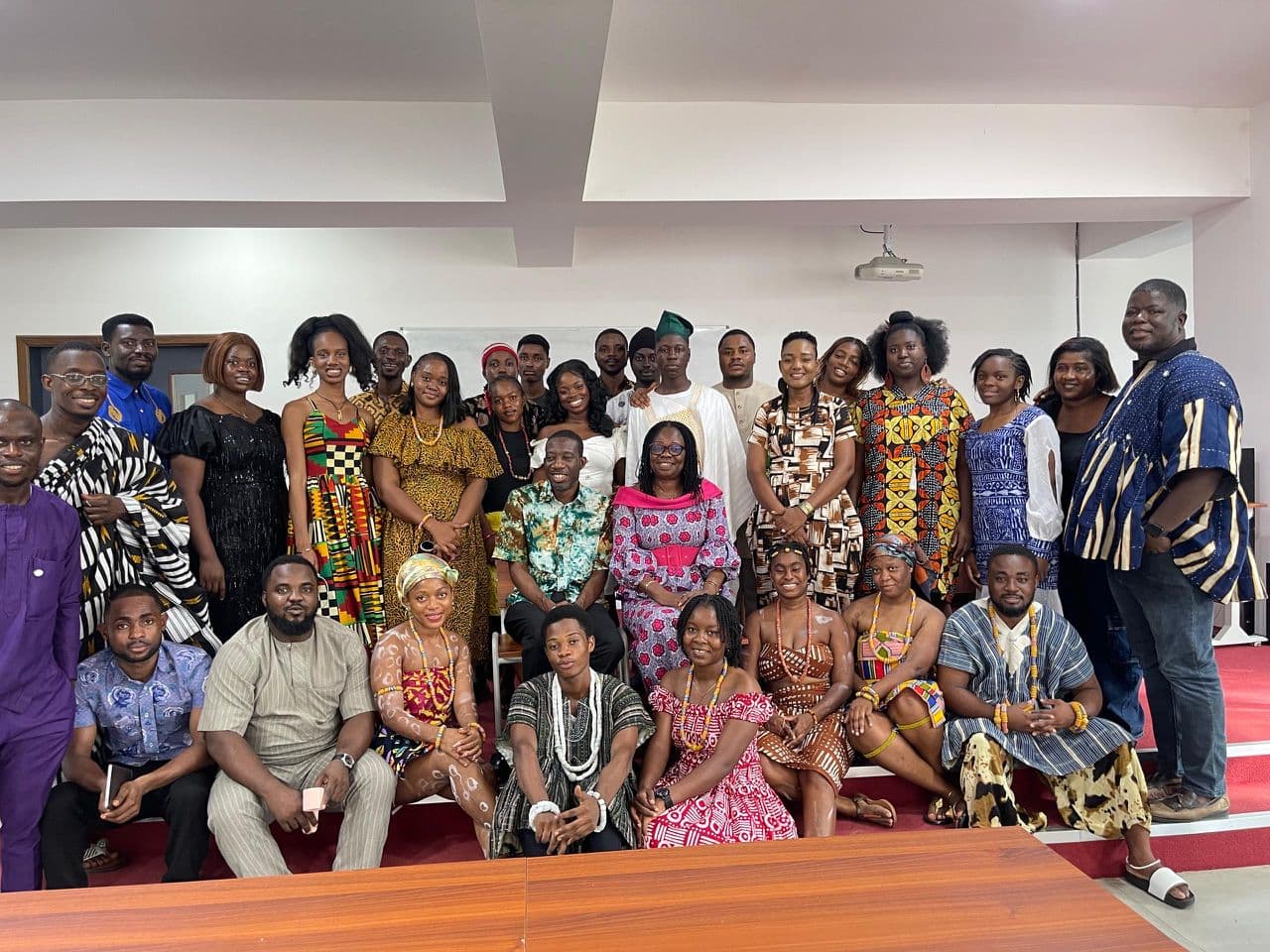
On 13th May and 16th May, 2026, a series of academic and
cultural presentations was organized at Southshore University College by Level
100 students under the guidance of Mrs Helen Nana Mensah as part of the
Principles of Social Behaviour course. The first presentation, held on 13th
May, focused on the Founding Fathers and key sociological thinkers, while the
second, held on 16th May, centered on African culture and heritage. Together,
these programs aimed to deepen students’ understanding of social theory,
historical leadership, and African cultural identity, while promoting unity,
critical thinking, and appreciation of diversity.
The presentation on 13th May explored the intellectual
foundations of sociology and social behaviour through the works and ideas of
prominent thinkers such as Émile Durkheim, C. Wright Mills, and Robert K.
Merton. Students examined key concepts including community versus
individualism, globalization, social structure, and the role of institutions in
shaping human behaviour. The session emphasized analytical thinking and
demonstrated how theoretical frameworks can be applied to understand real-world
social dynamics. On 16th May, the focus shifted to a vibrant celebration of
African culture and heritage. The campus was transformed into a rich cultural
space showcasing traditions from Ghana, Nigeria, Togo, Benin, Equatorial
Guinea, Cameroon, and Liberia. Students displayed traditional attire such as
Ghanaian kente, Nigerian Ankara, and various indigenous fabrics representing
West and Central African identities. Special attention was given to cultural
groups, including the Ijaw and Urhobo from Nigeria and the Vogan community from
Togo, as well as Gadamgbe and Akan from Ghana, among others, with detailed
explanations of symbolism, history, and cultural significance.
The event also featured energetic cultural performances,
including traditional dances, drumming, poetry recitals, storytelling, and
dramatizations. These performances highlighted the richness of African oral
tradition and cultural expression. Ghanaian and Nigerian drum rhythms and
dances created a lively atmosphere, while storytelling traditions from Liberia and
Cameroon emphasized the importance of oral history in preserving cultural
identity. A food exhibition further enriched the experience, showcasing a
variety of traditional African dishes. Meals such as Ghanaian ‘etor’, kenkey,
jollof rice, turkey, salad, and various Nigerian, Togolese, and Cameroonian
delicacies were presented. These dishes highlighted the role of food as a key
element of cultural identity and social connection, while refreshments added to
the hospitality of the event.
The program also encouraged active student participation,
with discussions, questions, and cultural exchanges that fostered mutual
understanding and respect. The interactive nature of the event strengthened
unity among students and deepened appreciation for cultural diversity across
the African continent The presentations were honored by the presence of guests,
including Dr Gatogo, the dean of the school of Social Science, Arts and
Humanities and Mr. Chris Nortey, lecturer in Logic and Critical Thinking, who
observed the strong integration of academic theory with cultural expression and
student creativity.
In conclusion, both presentations were highly successful and
intellectually enriching. The events effectively combined academic theory with
cultural practice, offering students a deeper understanding of social
behaviour, leadership thought, and African identity. The programs highlighted
the importance of preserving cultural heritage while also developing critical
thinking skills through sociological study. They also strengthened unity,
collaboration, and appreciation for diversity among students at Southshore
University College