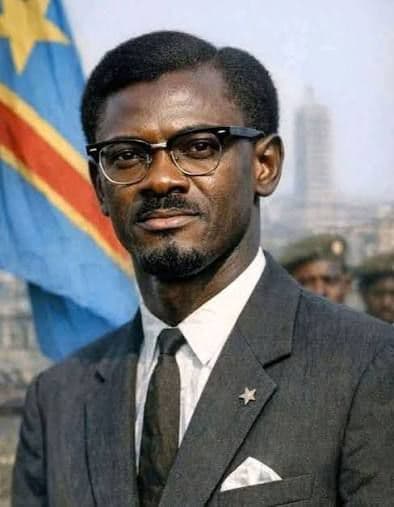
Throughout Africa's history, few leaders have embodied the spirit of courage as profoundly as Patrice Emery Lumumba. As the first democratically elected Prime Minister of the Democratic Republic of the Congo, Lumumba became a symbol of Africa's determination to chart its own course during the era of independence.
Born on 2nd July 1925, Lumumba emerged as a passionate advocate for freedom, national unity, and self-determination. At a time when many African nations were still under colonial rule, he spoke boldly against oppression and championed the right of Africans to govern themselves with dignity and pride.
His historic Independence Day speech on 30th June 1960 remains one of the defining moments in African leadership. While many expected a ceremonial address, Lumumba courageously acknowledged the suffering endured under colonial rule and affirmed the Congolese people's determination to build a sovereign nation. His words resonated across the continent, inspiring generations of Africans to believe in the possibility of genuine independence and self-governance.
However, courage often comes at a cost. The Congo soon faced political instability, external interference, and internal divisions. Within months of taking office, Lumumba was removed from power, arrested, and tragically assassinated on 17th January 1961. Although his political career was brief, his unwavering commitment to his convictions ensured that his influence would endure long after his death.
Patrice Lumumba's legacy continues to inspire discussions on courageous leadership, integrity, patriotism, and the responsibilities of those entrusted with public office. While historians continue to debate aspects of his leadership and the complex political circumstances surrounding his time in office, there is broad recognition of his remarkable determination to defend the sovereignty and future of his nation.
The Southshore C³ Leadership Reflection:
At Southshore University College, the Courage pillar of our C³ Framework, Character, Courage, and Competence, reminds us that true leadership requires the willingness to stand for what is right, even when it is difficult.
Courage is not simply the absence of fear. It is the ability to make principled decisions, speak with integrity, embrace responsibility, and remain committed to a worthy cause despite challenges or opposition.
As students prepare to become leaders in business, governance, media, technology, and other professions, Patrice Lumumba's story encourages us to ask ourselves:
* Will we have the courage to uphold truth when it is unpopular?
* Will we defend ethical values even under pressure?
* Will we use our education to serve our communities and contribute to Africa's development?
The future of Africa depends not only on knowledgeable graduates but also on courageous leaders who possess strong character and the competence to transform society.
Leadership begins where courage meets conviction.